
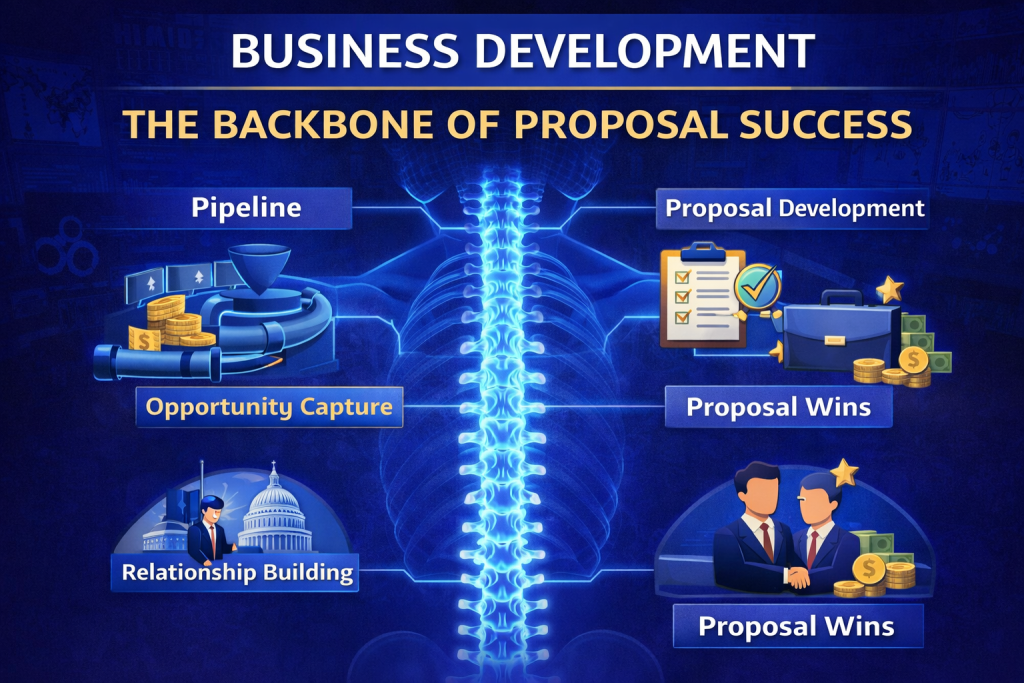
Proposal development and Business development are essential components of any organization that prioritizes growth. Building and maintaining a successful Proposal Development (PD) team is nearly impossible without a solid Business Development (BD) strategy. Writing is not the first step in a successful proposal; opportunity qualification, capture planning, and long-term client relationships—each driven by BD-must come first.
Business development is the organization’s spinal cord. It connects revenue targets, client needs, competitive positioning, and market intelligence into a single operating system. When BD is misaligned or underdeveloped, proposal development becomes reactive, ineffective, and unnecessarily expensive.
Business Development’s Contribution to Proposal Success
When the BD function is strong, Proposal Development teams work on qualified, winnable opportunities. Market research, client engagement, capture management, and pipeline prioritization ensure that proposal teams focus on win themes, compliance, and differentiation instead of scrambling to meet unrealistic deadlines.
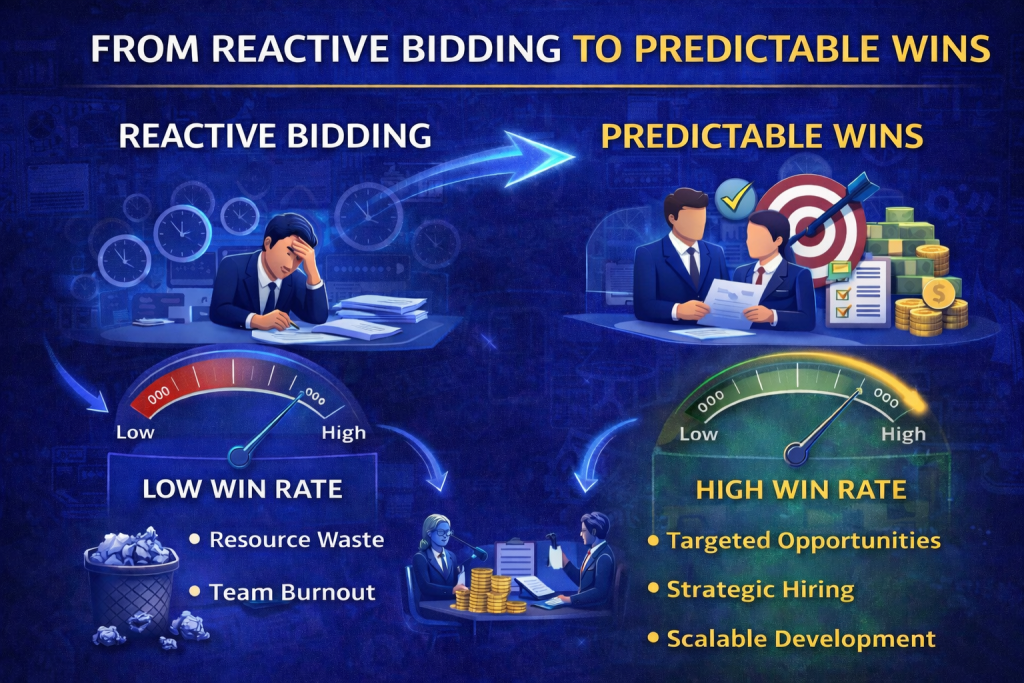
When BD lacks discipline, Proposal Development suffers. Organizations often hire proposal writers and subject matter experts based on assumed pipelines rather than verified market intelligence. This reactive approach leads to low win rates, wasted resources, and team burnout.
Why Relying on Tier I Clients Can Be High Risk
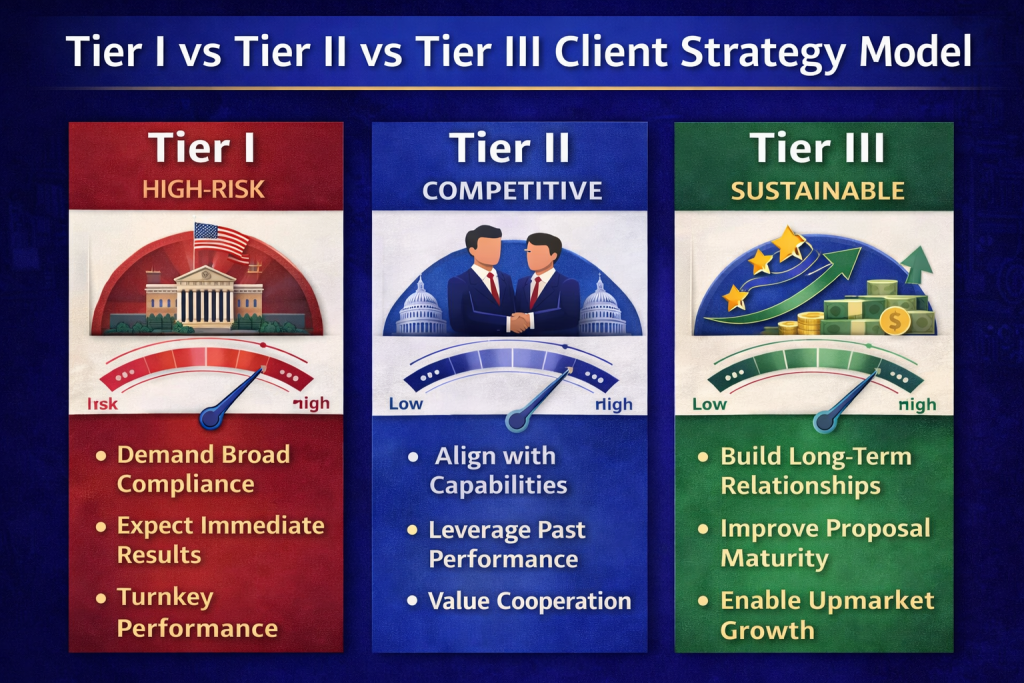
Many companies believe that focusing on Tier I clients is the fastest path to growth. However, for organizations without strong historical performance, Tier I pursuits are often high-risk. These clients expect immediate results, strict compliance, and well-documented past performance.
When BD teams chase Tier I opportunities without a realistic probability of win, Proposal Development is forced into costly, low-return pursuits. Failed proposals leave companies with idle proposal staff and no sustainable pipeline, while Tier I clients quickly disengage.
The Strategic Value of Tier II and Tier III Clients
A sustainable BD strategy prioritizes Tier II and Tier III clients. Tier II clients typically align well with a company’s current capabilities and past performance, allowing proposal teams to be more targeted and competitive. These clients also value collaboration and reliability, which improves win rates and encourages repeat business.
Tier III clients play a critical role in building past performance and refining capture and proposal processes. They allow firms to develop long-term BD relationships while strengthening proposal maturity. Over time, Tier III wins enable organizations to move upmarket with confidence and credibility.
Building a Scalable Proposal Development Model
When Business Development focuses on the right clients and opportunities, Proposal Development becomes proactive instead of reactive. Win rates increase, hiring decisions become strategic, and proposal schedules become predictable. The BD pipeline supports long-term growth rather than short-term volume, and capture management becomes disciplined and structured.
Ultimately, proposal success is determined by the quality of business development, not the quantity of proposals submitted. A strong BD team is the foundation of a high-performing Proposal Development organization that wins consistently and grows sustainably.